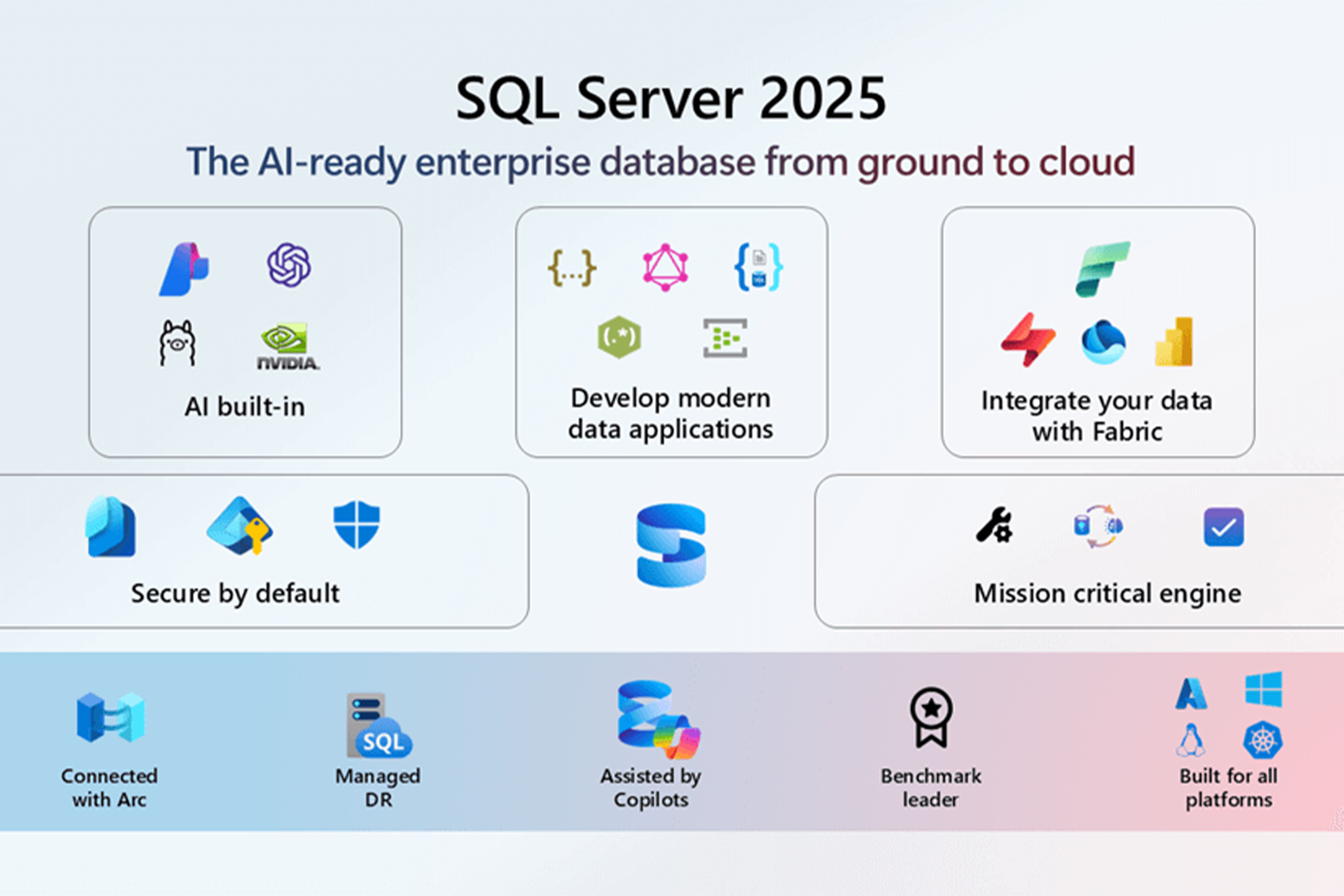
Microsoft SQL Server is a comprehensive database management course designed to equip learners with the knowledge and practical skills required to design, develop, manage, and optimize relational databases using Microsoft SQL Server. The course is suitable for beginners as well as professionals who wish to strengthen their database management capabilities, and it provides a structured pathway from basic concepts to advanced database operations.
Throughout the course, learners are introduced to the fundamentals of databases, including database concepts, relational database design, tables, relationships, and normalization. Students learn how to create and manage databases using SQL Server, define tables and data types, and ensure data integrity through constraints such as primary keys, foreign keys, and indexes. This foundation helps learners understand how data is structured and stored efficiently in modern systems.
The course also focuses heavily on SQL (Structured Query Language), where learners gain practical skills in writing queries to retrieve, insert, update, and delete data. Students learn how to write simple to complex queries using SELECT statements, joins, subqueries, grouping, filtering, and sorting techniques. These skills are essential for working with data in real-world business applications and systems.
In addition, learners are trained in advanced SQL Server features such as stored procedures, functions, triggers, views, and transaction management. The course also covers database security, user permissions, backup and recovery, and performance optimization techniques that ensure databases run efficiently and securely in professional environments.
A strong emphasis is placed on hands-on practice, where learners work on real database projects such as inventory systems, school management systems, financial tracking systems, and business reporting databases. These practical exercises help students develop confidence in managing real-world data-driven applications.
The course also introduces learners to database administration tasks such as monitoring performance, maintaining data integrity, optimizing queries, and ensuring system reliability. This prepares students for both development and administrative roles in database environments.
Upon completion of the course, learners are well prepared for careers in database development, data management, and IT support. Career opportunities include SQL Developer, Database Administrator (DBA), Data Analyst, Systems Developer, and Business Intelligence Support Specialist.
Overall, this Microsoft SQL Server course provides a strong foundation in relational database management, enabling learners to confidently build, manage, and optimize databases for a wide range of business and organizational applications
Introduction to Databases and SQL Server
Introduces database concepts, relational database systems, and Microsoft SQL Server architecture
5 LessonsInstalling and Configuring SQL Server
Covers installation, configuration, and setup of SQL Server development environments.
5 LessonsDatabase Design Fundamentals
Focuses on designing efficient and scalable relational databases
5 LessonsSQL Query Fundamentals
Introduces the Structured Query Language (SQL) used for data retrieval and manipulation
5 LessonsAdvanced SQL Queries
Develops advanced data retrieval and manipulation skills
5 LessonsData Manipulation and Transactions
Covers techniques for inserting, updating, and managing data safely
5 LessonsDatabase Objects and Programming
Introduces reusable database objects used in SQL Server developmen
5 LessonsTransact-SQL (T-SQL) Programming
Focuses on advanced database programming using T-SQL.
5 LessonsDatabase Security
Explores methods for protecting databases and controlling access
5 LessonsIndexing and Performance Optimization
Develops skills in improving database efficiency and performance
5 LessonsBackup, Recovery, and Maintenance
Covers essential database administration and maintenance procedures
5 LessonsReporting and Business Intelligence
Introduces reporting and business intelligence tools within the SQL Server ecosystem.
5 LessonsData Warehousing and ETL
Explores large-scale data management and integration processes
5 LessonsSQL Server Development Best Practices
Focuses on professional database development standards and methodologies.
5 LessonsModern SQL Server Applications
Examines real-world database applications and enterprise solutions.
5 LessonsSQL Server Capstone Project
Learners design, develop, secure, and optimize a complete database solution
6 LessonsAssessment
Upon successful completion of the programme, learners will be awarded a Professional Certificate in Microsoft SQL Server Development, demonstrating competence in database design, SQL programming, T-SQL development, database security, performance optimization, reporting, and enterprise database management using Microsoft SQL Server
9 Lessons
Kaweesi Patrick
Login To Leave Review
- Price
USh376,200
USh600,000 - Instructor Kaweesi Patrick
- Duration 122 days
- Category Database Management & SQL
- Curriculum 17
- Lectures 90
- Enrolled 0